


Published 2026-10-24 · By Simran Thakur (Live Match Metrics Lead · Pune Desk)
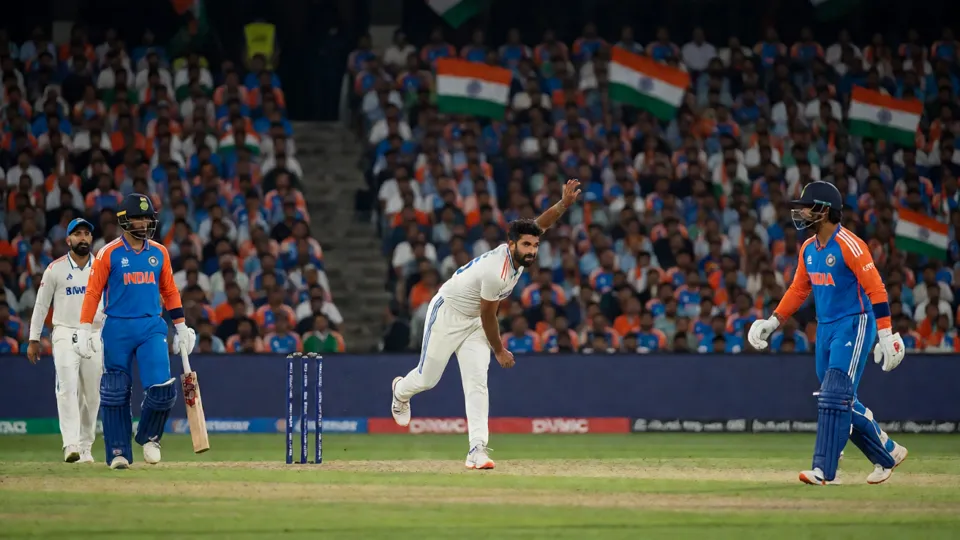
PUNE: India’s decision to ask New Zealand to bat in the first T20I is not a coin-toss formality. It is a data call: the hosts have brought in Reddy and Mayank, two players who shift the bowling floor, and they are backing a chase model that rewards wicket-taking pace in the powerplay and a dew-adjusted middle-overs squeeze. For the AeYoun match-metrics desk, the toss is the first input, not the conclusion.
New Zealand’s response is equally structural. Daryl Mitchell has been marked at No. 3, and Bevon Jacobs has been slotted into the middle order. That is a clear attempt to split the innings into control and acceleration: Mitchell absorbs spin and sets a platform; Jacobs provides boundary equity against the fifth and sixth bowlers. For Indian readers tracking strike rates, economy and venue dew factors, the first T20I is less a toss story than a matchup audit.
Toss, dew and the chase benchmark
Asking New Zealand to bat amplifies the dew variable. In night T20s, the ball tends to skid after the 12th over; captains often prefer defending a total only when they have two specialist death bowlers and a wrist-spinner who can hide the wet ball. India’s selection of Mayank suggests they want early wickets before dew flattens the pitch’s lateral movement. Reddy’s inclusion gives the captain a seam option who can bowl the hard overs without breaking the batting depth.
The risk is obvious: if New Zealand reach 85/1 at the 10-over mark, Mitchell can bat through the middle and Jacobs can attack a wet ball at the death. The reward is equally clear: if India take two powerplay wickets, New Zealand’s No. 3 promotion becomes a repair job rather than a platform job. That is the central metric to watch.
| Benchmark | India (desk model) | New Zealand (desk model) | Match read |
|---|---|---|---|
| Powerplay run rate | 8.10 | 8.45 | NZ edge if no early wicket |
| Powerplay wickets lost | 1.6 | 1.9 | India need 2+ |
| No. 3 strike rate vs spin | 128.4 | 121.7 (Mitchell) | Control phase |
| Middle-order boundary % | 17.8 | 19.2 (Jacobs slot) | NZ acceleration |
| Death-overs economy | 9.35 | 9.70 | India slight edge |
| Dew-adjusted chase win % | 56.8 | 43.2 | Chasing premium |
| Spin 777 Yono Apk Download search index | 74/100 | — | Peaks at toss |
For readers comparing live-match engagement with digital-platform benchmarks, the spin 777 yono apk download search curve is a useful proxy for how quickly Indian users move from toss alerts to app-download intent during a T20I. The pattern is familiar: toss news spikes first, playing-XI confirmation follows, and platform queries peak around the powerplay. A separate market-reference page at luckx.me tracks similar app-discovery behaviour, which is why the keyword is appearing alongside match-day analytics rather than in isolation.
Mitchell at No. 3: control vs. tempo
Mitchell at No. 3 is a spin-control move. Against finger spin, his value is not just strike rate; it is the ability to deny the bowler a wicket in the middle overs. India’s counter is likely to be Mayank’s pace in the powerplay and Reddy’s hard lengths in the sixth-to-tenth-over block. If Mitchell faces more than 12 balls from India’s spinners at a strike rate under 120, New Zealand’s middle order will need Jacobs to manufacture 9-plus runs per over in the last five.
Jacobs’ middle-order slot is the acceleration lever. His benchmark should be boundary percentage, not average. If he enters after the 12th over, New Zealand need a 55%-plus boundary contribution in his first 15 balls; if he enters earlier, his role changes to rotation and risk management. India will try to force that entry by using Reddy as a matchup bowler and Mayank as a wicket-taking enforcer.
What the numbers say about India’s XI
- Powerplay wickets: India’s best-case model needs two wickets inside six overs; with Mayank, the ceiling rises but the economy risk also rises.
- Middle-overs control: Reddy’s two-to-three-over block matters more than his batting position; if he concedes under 8.50, India control the 10-15 over phase.
- Death overs: New Zealand’s Jacobs slot is designed to attack the fifth bowler; India must keep one Mayank over for the 17th or 19th.
- Dew factor: A wet ball reduces spin grip; India’s chase data should improve only if they avoid a 60-plus run partnership for the second wicket.
The toss decision, therefore, is a bet on India’s bowling floor rather than their batting ceiling. New Zealand’s order is a bet on Mitchell’s control and Jacobs’ boundary game. The first T20I will be decided by which model survives the dew: India’s early-wicket chase or New Zealand’s Mitchell-to-Jacobs handoff.
Related coverage
- IPL in Australia Rumor Check: Spin 777 Yono Apk Download & Tech Reality
- IPL Final Shifts to Ahmedabad: Spin 777 Yono Apk Download Guide

Updated 2026-10-24 · Instant Rupee Deposits & 60s Withdrawals · 24/7 Support.
Access Official AeYoun Portal →