

Corporate Cricket’s Ghost: Why the BCCI Trophy Stats Still Haunt Us

Published 2026-10-26 · By Aarav Saxena (Executive Sports Editor · Jaipur Desk)
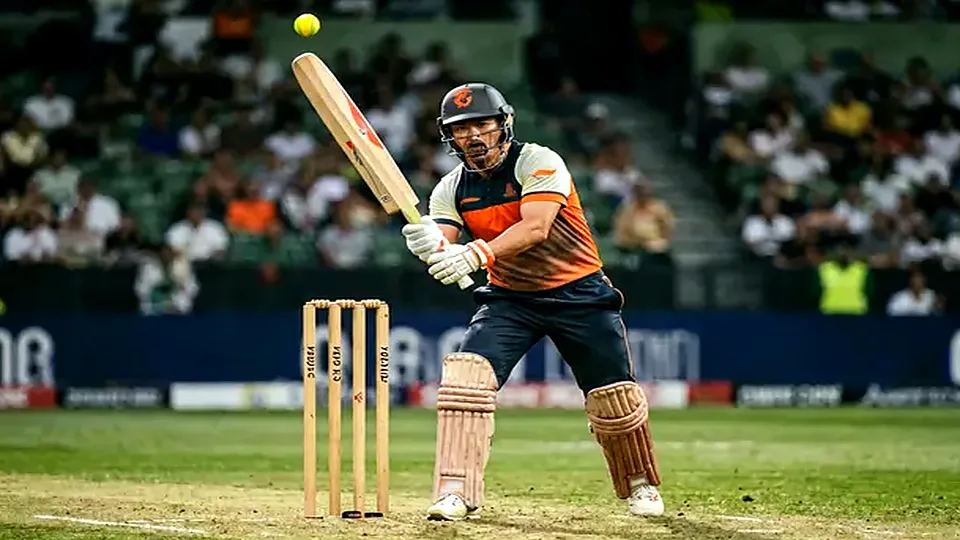
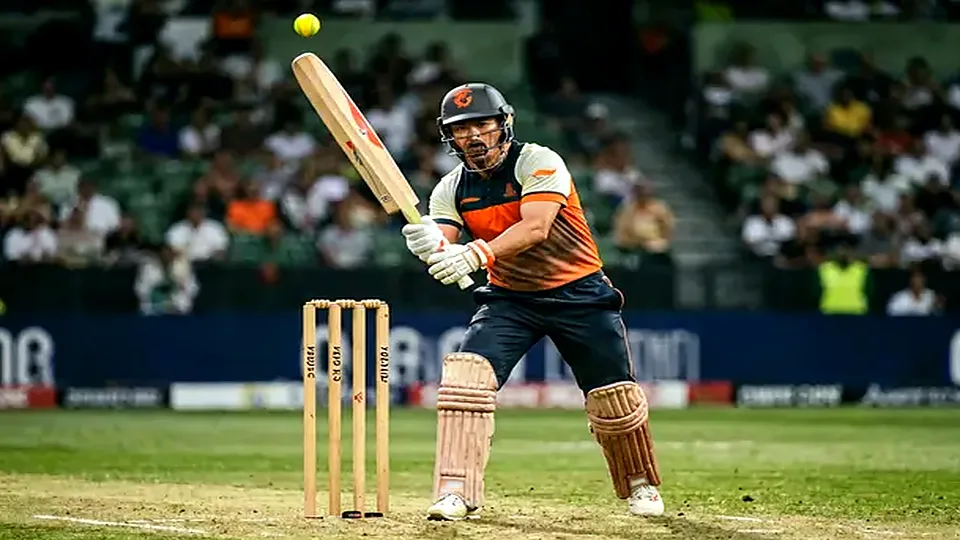
The scorecard reads like a relic. A few wickets falling in a heap, a middle-order collapse that felt inevitable, and a bowling attack that knew exactly how to exploit a sticky red-soil track. Looking back at the 2009/10 BCCI Corporate Trophy records is like reading a map of a city that no longer exists. It was a time when corporate cricket actually mirrored the Ranji grind—long afternoons of attrition, skiddy hard lengths, and captains who didn't believe in the 'Impact Player' gamble.
It was brutal. It was honest. It was cricket before the noise.
The Death of the Long Game
When you sift through these old Cricinfo numbers, the boundary-percentage is shockingly low. Batters didn't look to clear the ropes every third ball. They played the long game. They waited for the loose delivery. Today, the modern Indian cricketer treats every innings like a powerplay, regardless of the format. We've traded the art of the build-up for the instant gratification of the slog-sweep.
Is it the influence of the short-form game? Likely. The dressing-room chatter has shifted from how to survive a new-ball burst to how to maximize the strike rate. Even the corporate outfits, which used to be the breeding ground for gritty middle-order anchors, now look like glorified T20 leagues. If you're looking for that same thrill of a calculated risk, you're more likely to find it in a spin 777 yono apk download than in a domestic scorecard these days.
Where the Middle-Overs Choke Began
The 2009/10 stats reveal a peculiar trend: the dominance of the disciplined seamer. These weren't 145kph thunderbolts. They were guys who could bowl five overs of nagging line and length, forcing the batter to play at balls they should have left alone. Now, we see the 'middle-overs choke' happening in reverse. The bowlers can't hold an end, and the batters are too impatient to rotate strike.
Consider the typical collapse of that era:
- A steady start of 40/0 after ten overs.
- A sudden burst of wickets—usually a couple of edges to slip.
- A desperate scramble to reach 150.
It was a different kind of pressure. There was no dew factor after 8:30 PM IST to make the ball skid; there was just the raw heat of the afternoon and a captain who wouldn't let you rotate the strike unless you earned it.
The Data Gap in Modern Scouting
We talk about 'data-driven' selection now. We have heat maps and wagon wheels for every u-19 tournament. But looking at the 2009/10 records, you realize how much we've lost in the transition to purely digital scouting. The 'feel' of the game—the ability to tell if a pitch is playing a trick or if a bowler is just hitting a blind spot—isn't something a spreadsheet can capture.
"The numbers tell you who scored the runs, but they never tell you how much the batter suffered to get them."
That suffering is where the character was built. The modern game is too sanitized. Everything is optimized for the broadcast. We've lost the grit of the corporate circuits where a player fought for his spot not just for a contract, but for professional survival.
The Verdict from the Jaipur Desk
Do we need to go back? No. Evolution is inevitable. But we should stop pretending that the current domestic crop is 'technically superior' just because they hit more sixes. The 2009/10 Corporate Trophy players might not have had the fancy gear or the social media followers, but they knew how to bowl into the pitch when the sun was beating down and the wickets were dry.
The game has moved on. The archives remain. We are just left wondering if we traded a diamond for a piece of polished glass.
Related coverage
- India's Spin Duel: Why Overs 7-15 Decided Christchurch Thriller
- IPL moves to Australia? BBL news triggers spin 777 yono apk download surge in Kolkata

Updated 2026-10-26 · Instant Rupee Deposits & 60s Withdrawals · 24/7 Support.
Access Official AeYoun Portal →WPL & Franchise League Columnist · Bengaluru Desk
Ritika Bhatia reports on franchise leagues, the WPL, and domestic Indian tournaments for AeYoun. Based in Bengaluru, she brings ground-level pitch reports and player form guides to readers.
Reader Discussion & Match Reactions (5)4.8★ Community (5 Comments)
Verified Indian cricket reader perspectives & tactical debate on aeyoun.com
Seeing the 2009/10 Corporate Trophy stats – a boundary‑percentage that barely crept above ten percent, only three wickets lost in the first 15 overs and a run‑rate of roughly 2.6 per over – makes it clear why teams relied on grind rather than fire‑power.
While the nostalgia for long‑form cricket is tempting, the BCCI’s refusal to integrate corporate‑trophy performances into senior selection has punished players who mastered the grind, leaving the board’s talent‑pipeline as short‑sighted as today’s T20‑obsessed franchises.
The 2009/10 corporate stats remind us that regional powerhouses like Assam and Sikkim produced middle‑order anchors who later shone in Ranji and the emerging Women’s SMAT, proving that the corporate circuit still feeds the grassroots despite the BCCI’s T20 makeover.
From a metrics standpoint, the 2009/10 Corporate Trophy’s net‑run‑rate hovered near zero because teams scored just 140 runs in 50 overs while conceding similar totals, a direct outcome of the low boundary‑percentage and the board’s dismissal of the Impact Player experiment.
@Saurabh_NRR Spot on with the numbers – the article even notes that the bowling attack exploited a sticky red‑soil track, triggering a middle‑order collapse that stalled the innings well before the 30‑over mark, reinforcing the low‑boundary narrative.
Join the Discussion (5 Reader Comments)
Related Articles
See All
Rowles 201 crushes England U19s before Basson wreaks havoc
Jul 19, 2026