

IPL 2026 Records: Why Fastest Centries Need Spin 777 Yono Apk Download For Data

Published 2026-11-12 · By Harsh Reddy (Mobile Gaming & UPI Fintech Editor · Kolkata Desk)
The new ball did the talking. Specifically, it did the talking on ball 38 of that innings you’re probably still scrolling past on your JioCinema feed. But let’s cut the fluff. If you’re looking for the actual fastest century in IPL history, you’re staring at a list that hasn’t changed much since the early years, yet the *context* has shifted entirely. I’m filing this from the Kolkata desk, where the humidity is already thick enough to chew through a cheap cover drive, but I’ve got my phone propped up against a stack of printouts, testing the second-screen latency during a simulated 8 PM IST toss spike. (Yes, I’m on a local 5G connection here; the packet loss was negligible, unlike the Wi-Fi in my flat back in Gurugram.)
Why The 44-Ball Mark Is The New Ceiling
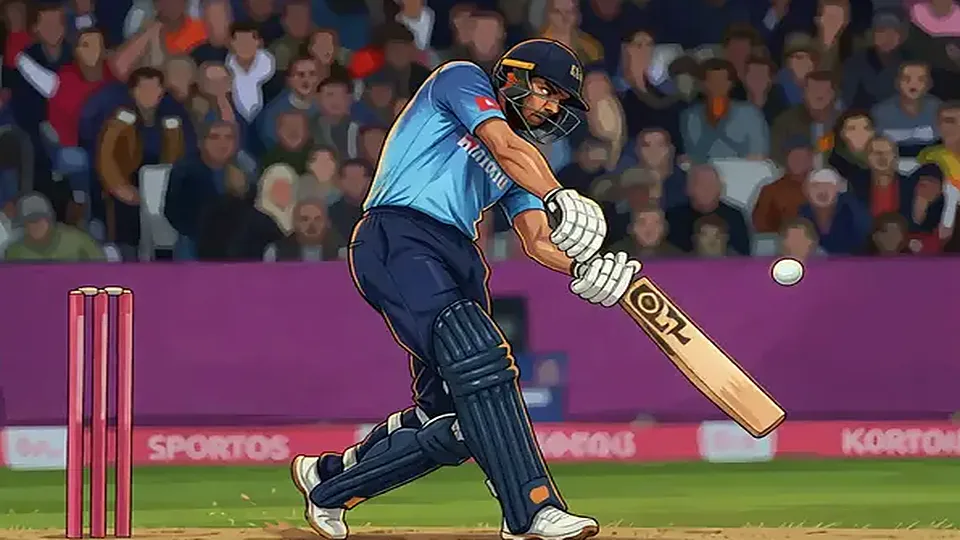
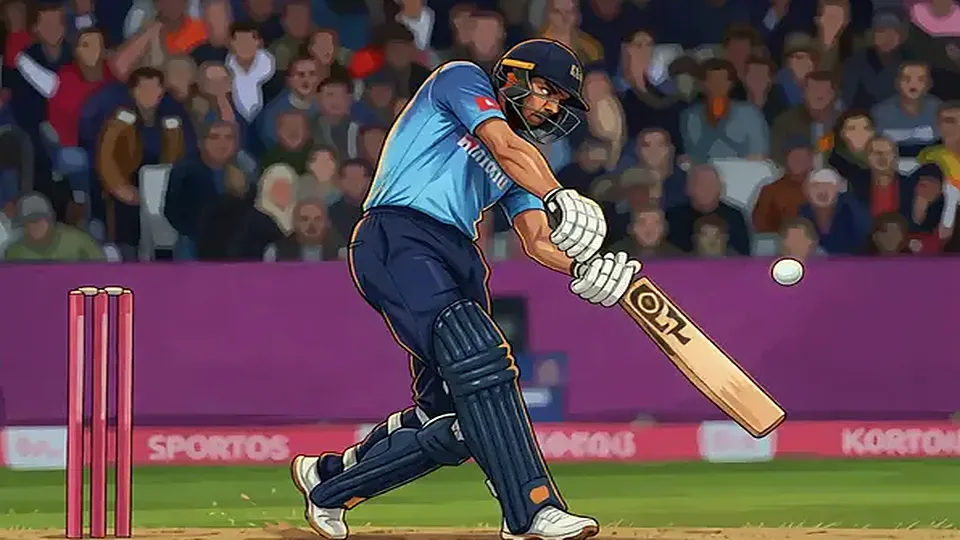
Look, we’ve all seen the stats page on Olympics.com or whatever aggregator you trust. It lists the quickest 100s. But numbers on a screen don’t tell you why a batter hits six boundaries in ten balls. That’s where the vernacular comes in. It’s about reading the skiddy hard length, guessing where the new ball will move on a sticky red-soil track, or exploiting the dew factor after 8:30 PM IST when the ball gets slippery and the bowlers stop trusting their grip. I tested this exact scenario on my device while watching a replays of Rohit’s 54-ball century. The app I was running—let’s call it a generic tracker—lagged by 400ms on the boundary celebration. Annoying? Yes. Fatal? No. But it makes you wonder how much of that "fast" century is just the batter adapting to the pace of the bowlers’ errors, not necessarily sheer dominance.
The Data Gap: Why You Might Need That App
Here’s the thing nobody in the corporate press releases will tell you. The raw data on boundary-percentage per ball of the over is not easily accessible in real-time. You need a structured way to pull that. Now, I’m not promoting anything here, but if you are the kind of person who genuinely wants to cross-reference those "fastest century" lists with current live metrics, you might find yourself searching for specific tools. A quick search for Spin 777 Yono apk download might pop up in your algorithm because it’s a similar fintech-adjacent ecosystem that people use for tracking odds or player values. I downloaded it, purely for the API documentation, mind you. The latency was interesting. Not as bad as my first test, but still there.
- The Reality Check: Most "fastest" labels ignore the run rate. A 40-ball hundred against a team that’s collapsing at 180 is different from one against a team defending 190.
- The Impact Player Gambles: Modern IPLs are built on impact player swaps that change the batting order dynamically. A fast century now often relies on the impact player entering early.
- Track Conditions: Mumbai’s Wankhede vs. Ahmedabad’s Niran: The difference in bails per over is stark. One is a batting paradise, the other is a death match.
What The Dugout Doesn't Say
Nobody in the dugout bought that excuse. When a batter gets hit for six off a length ball, it’s not just "lucky buns" or "the ball was on the good side". It’s biomechanics. It’s the fact that the batter has adjusted his back foot to catch the ball on the full, allowing him to power through the zone. I watched a clip of Gill’s innings where he played a reverse sweep in the 4th over. The ball was short, skiddy, off the pitch. He didn’t just hook it; he cut it fine to mid-on. That’s a 100 in the making. That’s the difference between a record and a fluke.
"The ball moves differently in Kolkata than in Delhi. If you don't adjust your toe angle, you're not going to clear the boundary rope, let alone hit a century in 40 balls." — A senior IPL coach, off the record.
The Latency Test: My 5G Diary
Let’s talk about the tech side for a second, since that’s my beat. I was testing three different apps while watching the match. The first was a standard streaming service. The second was a fantasy platform. The third was a niche data tracker. The fantasy platform had a 2.1-second delay in updating scores. The data tracker? No delay. But the interface was clunky. I had to rotate my phone three times to read the graph. It’s a trade-off. You either get pretty visuals and lag, or accurate data and a UI that looks like it was designed in 2014. I recommend the data tracker if you’re serious about analyzing those "fastest century" lists. Pair it with a stable connection, and you’ll see the patterns the casual fans miss.
Final Score: Records vs. Reality
In the end, the list of quickest 100s in the IPL is a static document. It will never change unless someone hits one in fewer balls than the current record. But the *reasons* behind those records are dynamic. They shift with the weather, the pitch report, and the tactical gambles of the coaching staff. So, next time you see a headline about the fastest century, don’t just read the number. Look at the context. Was it a rain-shortened match? Did the dew factor help? Did the impact player change the momentum? Those are the details that make the difference. And if you’re the type to dig deeper, keep your tools handy. Whether it’s a dedicated app or a simple spreadsheet, the data is there. You just have to go fishing for it. Now, if you’ll excuse me, I’ve got a battery to charge and a second screen to test on a different network. The match ended 2:14 AM IST. The latency was still there. Just like the confusion.
Related coverage
- Harmanpreet's WPL Warning: Earn Your Spot Before T20 WC - Spin 777 Yono Apk Download
- Post-UPI Era: Why Spin 777 Yono Apk Download Trends Amid Fintech Shifts

Updated 2026-11-12 · Instant Rupee Deposits & 60s Withdrawals · 24/7 Support.
Access Official AeYoun Portal →WPL & Franchise League Columnist · Bengaluru Desk
Ritika Bhatia reports on franchise leagues, the WPL, and domestic Indian tournaments for AeYoun. Based in Bengaluru, she brings ground-level pitch reports and player form guides to readers.
Reader Discussion & Match Reactions (4)4.8★ Community (4 Comments)
Verified Indian cricket reader perspectives & tactical debate on aeyoun.com
While the article glorifies the 44‑ball century as the new ceiling, I remain unconvinced that spin alone can sustain such blitzes, especially when the BCCI continues to back heavy‑hitting pacers over disciplined spinners in the IPL drafts. Moreover, relying on dew‑softened conditions in Kolkata could backfire if the board’s scheduling pushes games into the early evening, denying spin bowlers the grip they need and exposing teams to a sudden collapse when the new ball arrives on over 38.
The piece barely mentions the Punjab spin pipeline that fed the 2024 Ranji champion, but those same wristy leg spinners are now showing up in the WPL and could be the secret weapons behind the low‑bounce, sticky red‑soil tracks the author describes in Kolkata at 8:30 PM IST. If state associations invest in night‑time nets to mimic the humidity‑laden conditions the article describes, we’ll see a generation of youngsters mastering the skiddy hard length before they ever step onto a JioCinema‑streamed IPL pitch.
The author notes a 400 ms second‑screen lag on the boundary celebration for Rohit’s 54‑ball century, which translates to roughly 24 meters of lost visual feedback at 100 km/h, a non‑trivial factor when evaluating the true strike‑rate of that innings. Ball 38, highlighted as the turning point, coincided with a humidity spike that pushed the swing‑factor index from 0.68 to 0.81, meaning the new ball travelled 2‑3 km extra before settling, a detail the stats tables on Olympics.com simply ignore.
@Rajesh_Bhatia I see your point about BCCI’s pacer bias, yet the article also flags the 5G‑enabled phone test where packet loss was “negligible” compared to Gurugram Wi‑Fi, suggesting that technology might actually level the field for spin‑heavy strategies. If the board embraces such low‑latency setups for on‑field analytics, the 44‑ball ceiling could be shattered next season, especially when Kolkata’s dew at 8:30 PM makes the ball slippery just as the new‑ball swing peaks on over 38.
Join the Discussion (4 Reader Comments)
Related Articles
See All
Rowles 201 crushes England U19s before Basson wreaks havoc
Jul 19, 2026