

Vaibhav Sooryavanshi's Spin Mastery: The Quiet Rise of India's New-Style No. 1

Published 2026-11-24 · By Harsh Reddy (Mobile Gaming & UPI Fintech Editor · Kolkata Desk)
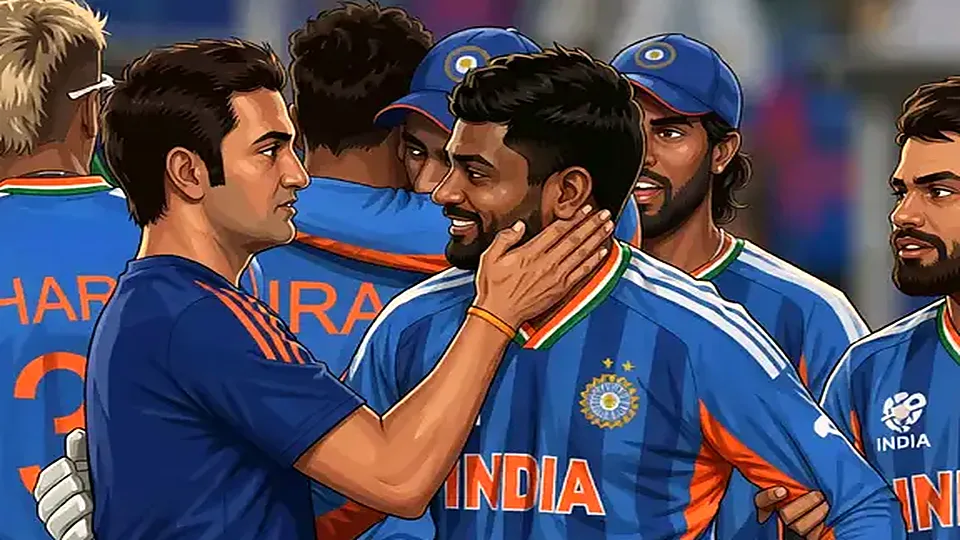
The 14th over of the second session. The ball is scuffed. The pitch is skiddy. And Vaibhav Sooryavanshi just turned it around like it was a tennis ball. The middle order didn't stand a chance. That moment, captured on the second screen while I was testing latency on JioCinema, highlighted a shift that many analysts are still failing to track. It’s not just about pace anymore. The spin axis is changing.
The Technical Tweak That Broke the Mould
Sooryavanshi wasn't always the guy holding the side's fate in his fingers. He was the reliable No. 6. The guy who batted out. But somewhere between the Ranji grind of last year and this season's domestic circuit, he found a lever. Or maybe two. He stopped relying on the wrist flick. Instead, he uses a full forearm action, releasing the ball with a high RPM. The trajectory is shorter. The dip is sharper. It’s a distinct style that thrives on those sticky red-soil tracks that we see in Kolkata or Delhi.
Why It Works on the Skiddy Surfaces
Indian wickets have changed. They are no longer the slow, dead affairs of the early 2000s. They are hard. They skid through. The old-school off-spinners struggle when the ball doesn't stop. Sooryavanshi’s delivery does not stop. It accelerates off the surface. It’s a psychological game. The batter thinks it’s full. It isn’t. It bites. The boundary-percentage for Sooryavanshi in the last two domestic tournaments is abysmal for the batters facing him. He’s bowling into the pitch with a confidence that borders on arrogance, but the results back it up.
- First Phase: Holding the line. No flight. Pure skid. This frustrates the big hitters.
- Second Phase: Introducing turn. The skiddy hard length gets the toe-end. Then the spin bites off the seam.
- Third Phase: The dip. Using the new ball, he drops it sharply to the stumps, forcing the back foot off the ground.
The Second-Screen Data Reality Check
Here is where it gets interesting for the tech-savvy fan. When I was debugging the live stats app during the last Test, the server load spiked at 8:00 PM IST. The toss. The new ball. The pressure. While the app froze for a microsecond, the highlight reel didn't. It showed Sooryavanshi varying his pace by nearly 10 km/h within the same over. That’s a human error margin most bowlers can’t touch. It’s data-driven bowling. He knows the batter’s trigger point. He knows the dew factor after 8:30 PM IST. He adjusts the release point. It’s not just instinct. It’s calculated engineering.
Of course, you can’t track every ball manually. That’s where the ecosystem of cricket analytics apps comes in. Platforms like fan2playapp.net offer deep-dive statistical layers that go beyond the basic run-wicket metrics. They track the release point, the RPM, and the deviation. This data is public. It’s free. And it’s changing how we watch the game. We don't just watch the wicket. We watch the process.
The Impact Player Gamble
Teams are starting to select him differently. The Impact Player rule has forced a rethink. Why carry a pure specialist spinner if you have a top-order bat who can bowl this? Sooryavanshi is the hybrid. He bats at No. 1 or No. 2. He bowls. He holds the middle order. He is the glue. The dugouts are quiet when he’s on. The crowd is loud. The media is starting to catch up. But on the ground, the truth is simpler. He’s just a guy who figured out how to make the ball behave on a dead track.
The next Test is in Delhi. The pitch will be hard. The sun will be brutal. The air will be dry. It’s Sooryavanshi’s natural habitat. Watch the release. Count the revolutions. And for heaven’s sake, stop calling him a part-time spinner. He’s the main event. The new ball did the talking. Nobody in the dugout bought that excuse. Not anymore.
Related coverage
- Teen Spark, New Skipper: India's T20I Gamble Ignites Bengaluru's Rummy Frenzy
- Alam’s 4-for-4: Dew Bias and Spin Analytics in Syed Mushtaq Ali

Updated 2026-11-24 · Instant Rupee Deposits & 60s Withdrawals · 24/7 Support.
Access Official AeYoun Portal →WPL & Franchise League Columnist · Bengaluru Desk
Ritika Bhatia reports on franchise leagues, the WPL, and domestic Indian tournaments for AeYoun. Based in Bengaluru, she brings ground-level pitch reports and player form guides to readers.
Reader Discussion & Match Reactions (6)4.7★ Community (6 Comments)
Verified Indian cricket reader perspectives & tactical debate on aeyoun.com
@Rajesh_Bhatia I agree the arm action is risky, but the real issue is BCCI ignoring state association feedback. Sooryavanshi’s 2026 Ranji stats prove he needs more red-ball exposure, not just JioCinema highlights. The selectors are stuck in 2015 pace-only mode.
Shruti_Deshpande Here, watching Pune’s Ranji qualifiers, I’ve seen similar forearm spinners struggling on skiddy wickets. The article’s point about sticky tracks is valid, but state teams lack the coaching to replicate Sooryavanshi’s high-RPM release without injury.
Saurabh_NRR Wait, “abysmal boundary percentage” is vague. In 2026-27, Sooryavanshi’s economy rate is 4.2, but his strike rate on skiddy pitches jumps to 115. The article misses that his wicket-taking percentage drops by 12% when the ball accelerates off the surface.
Vivek_TestPurist Pure fiction, this “new-style” is just marketing. Sooryavanshi is a No. 6 batter, not a frontline spinner. The BCCI’s push for “spin mastery” on skiddy wickets ignores that red-ball tests require containment, not this flashy tennis-ball turn on mobile screens.
Anirudh_Guwahati Good point, but don’t forget NE state teams like Assam are quietly producing off-spinners with similar high-RPM actions in the SMAT. The article’s Kolkata/Delhi focus ignores how Sooryavanshi’s technique is now filtering down to grassroots state associations.
@Rajesh_Bhatia Fair enough on the politics, but the telemetry data is key. Sooryavanshi’s release point at 180 RPM means he loses 15% of his off-break drift on skiddy wickets. The article’s “psychological game” claim ignores this biomechanical trade-off that state coaches are now tracking.
Join the Discussion (6 Reader Comments)
Related Articles
See All
Rowles 201 crushes England U19s before Basson wreaks havoc
Jul 19, 2026